

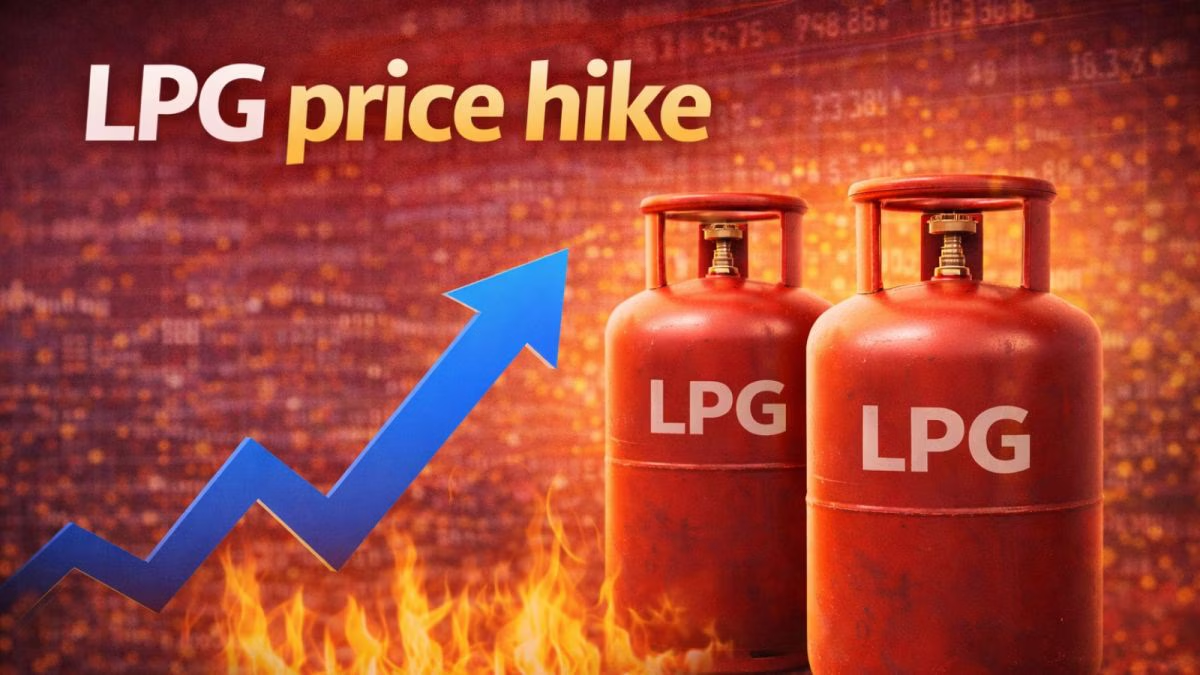
LPG Price Hike: What It Means for Households and the Economy
The recent increase in Liquefied Petroleum Gas (LPG) prices has once again sparked debate across India. LPG is the primary cooking fuel for millions of households, and any price change directly impacts family budgets as well as businesses that rely on cooking gas. The latest price revision has raised concerns about inflation, supply shortages, and the broader impact of global geopolitical tensions on India’s energy market.
Latest LPG Price Increase
In March 2026, the price of domestic LPG cylinders in India was increased by ₹60 per cylinder, bringing the price of a standard 14.2-kg household LPG cylinder to around ₹913 in Delhi. Commercial cylinders used by restaurants and businesses also saw a price hike of around ₹114–₹115 per cylinder.
The hike came after rising global energy costs and disruptions in gas supply chains. While LPG prices vary slightly across cities due to transportation and local taxes, the increase has affected households nationwide. For middle-class families that depend on LPG for daily cooking, even a moderate increase can significantly affect monthly expenses.
Why LPG Prices Are Rising
There are several reasons behind the LPG price hike, and most of them are linked to global market conditions.
- Global Energy Price Surge
International energy prices have been rising due to geopolitical tensions and supply disruptions. In particular, conflicts in the Middle East have affected oil and gas shipments through critical routes like the Strait of Hormuz, one of the world’s busiest energy transport corridors.
When tanker movement slows or stops in such regions, global supply becomes tight. This causes prices of crude oil and liquefied gases to rise, which eventually affects domestic LPG prices in importing countries like India.
- India’s Dependence on LPG Imports
India imports a large share of its LPG requirements from international markets. Experts estimate that around 60% of India’s LPG demand is met through imports.
Because of this dependence, any fluctuation in global prices quickly reflects in domestic rates. Even when the government attempts to control prices, sustained increases in international energy costs often force revisions in LPG rates.
- Supply Chain Disruptions
Shipping disruptions and rising freight costs have also contributed to the price hike. Some energy shipments from Gulf countries have slowed down due to geopolitical tensions, forcing India to diversify imports from other countries like the United States, Norway, and Russia.
While these steps help ensure supply stability, alternative routes and suppliers can increase transportation costs, which ultimately affect LPG pricing.
Impact on Households
For many families, LPG is an essential commodity. A typical middle-class household uses about one cylinder per month, meaning the price hike could add hundreds of rupees to annual household expenses.
Low-income families are particularly vulnerable to such increases. Although the government provides subsidies to certain groups under schemes like Pradhan Mantri Ujjwala Yojana, many households still struggle with rising refill costs.
As prices rise, some families may attempt to reduce LPG consumption by switching to alternative fuels like electric stoves, biomass, or kerosene. However, these alternatives may not always be safe or convenient.
Impact on Small Businesses
The LPG price hike also affects small businesses such as restaurants, street food vendors, tea stalls, and small eateries. These businesses often rely on commercial LPG cylinders, which have seen even larger price increases.
In several cities, vendors have already started raising the prices of food items like tea, snacks, and meals to cope with higher operating costs. Shortages of LPG cylinders in some areas have made the situation even more challenging for small business owners.
For many small entrepreneurs operating on thin profit margins, increased fuel costs can significantly reduce earnings.
Inflation and Economic Concerns
Energy prices play a major role in overall inflation. When cooking gas becomes more expensive, it indirectly affects food prices and the cost of services.
Economists warn that rising fuel prices could push inflation slightly higher in the coming months. Energy costs are closely linked to transportation, manufacturing, and food production, meaning the impact can spread across many sectors of the economy.
If global energy prices remain high, there may be further pressure on domestic LPG prices in the future.
Government Measures
To address supply challenges and prevent shortages, the government has taken several steps:
- Increasing LPG imports from alternative countries
- Directing refiners to maximize domestic LPG production
- Prioritizing residential supply over industrial consumption
- Monitoring distribution to prevent hoarding and black marketing
Authorities have also introduced changes in booking rules to ensure fair distribution. In some cases, consumers may need to wait around 25 days between cylinder bookings to prevent excessive stockpiling and maintain supply balance.
The Road Ahead
The future of LPG prices will largely depend on global energy markets and geopolitical developments. If international oil and gas prices stabilize, domestic LPG prices may also stabilize. However, continued conflicts or supply disruptions could lead to further increases.
For households and businesses alike, the LPG price hike serves as a reminder of how closely domestic energy costs are tied to global events. As India continues to expand its energy infrastructure and diversify imports, policymakers will face the challenge of balancing affordability with supply security.
In the long term, greater investment in renewable energy and alternative cooking fuels may help reduce dependence on imported LPG. Until then, consumers across the country will continue to feel the impact of rising cooking gas prices.