

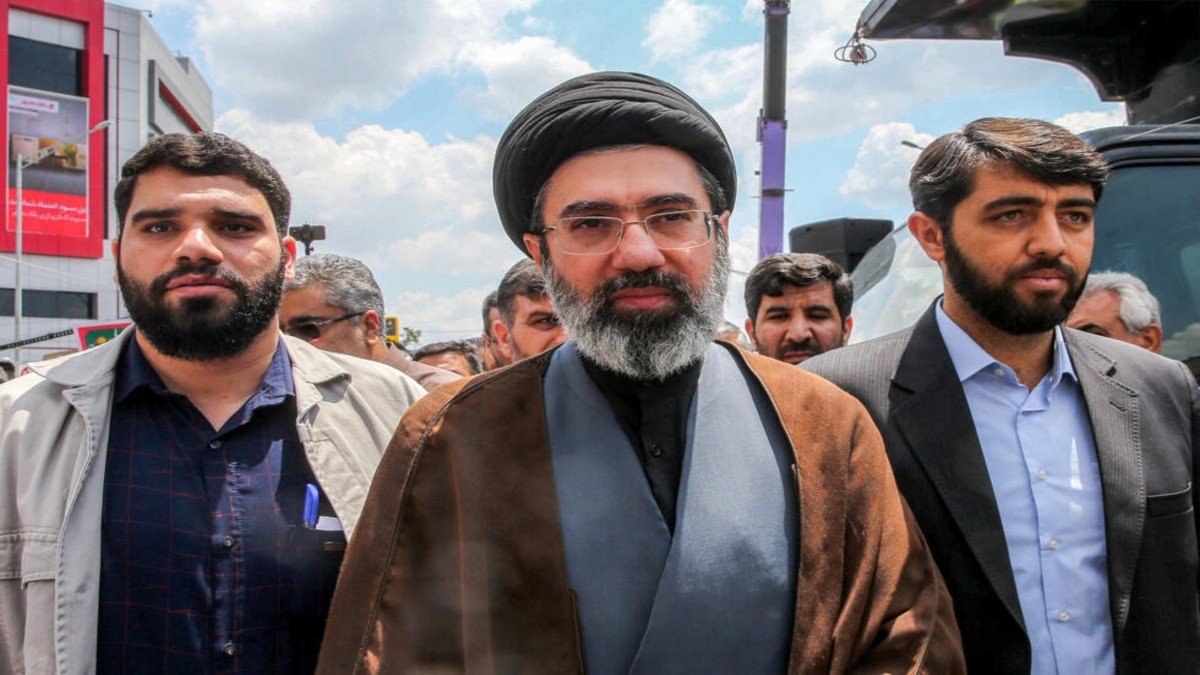
Iran’s New Supreme Leader Mojtaba Khamenei Threatens U.S. Bases Amid Escalating War
The Middle East is witnessing a dramatic escalation in tensions after Iran’s newly appointed Supreme Leader, Mojtaba Khamenei, issued a stark warning to the United States and its regional allies. In his first public statement since taking power, Khamenei threatened attacks on U.S. military bases across the Middle East and vowed to maintain pressure on Western interests in the region. His remarks come at a time when the geopolitical landscape is already volatile due to the widening conflict involving Iran, the United States, and Israel.
The statement signals a potentially dangerous new phase in the confrontation between Tehran and Washington, raising fears of a broader regional war that could impact global energy markets and international security.
Leadership Change in Iran
The rise of Mojtaba Khamenei to the highest political and religious position in Iran marks a historic moment. He assumed the role of Supreme Leader after the death of his father, Ali Khamenei, during the recent wave of airstrikes targeting Iranian military and nuclear infrastructure.
Iran’s Supreme Leader holds ultimate authority over the country’s political, military, and religious institutions. This makes Mojtaba Khamenei one of the most powerful figures in the Middle East today.
However, his appointment has sparked controversy both within Iran and internationally. Critics argue that the selection resembles dynastic succession rather than the revolutionary ideals of the Islamic Republic. Nonetheless, hardline factions and influential elements within Iran’s security apparatus reportedly backed his elevation to the leadership position.
First Statement: A Hardline Message
In his first wartime message broadcast on Iranian state television, Mojtaba Khamenei adopted a firm and confrontational tone. He warned that all U.S. military bases in the Middle East should be closed immediately or risk becoming targets of Iranian attacks.
The warning was directed not only at the United States but also at Gulf countries hosting American forces. According to Khamenei, these bases are enabling attacks against Iran and therefore constitute legitimate military targets.
The statement also included a pledge that Iran would avenge those killed during recent strikes and continue resisting what Tehran describes as foreign aggression. The message appears intended to rally domestic support while sending a strong signal to Iran’s adversaries.
Strait of Hormuz: A Strategic Pressure Point
Another critical aspect of Khamenei’s remarks was his insistence that the Strait of Hormuz should remain closed as a strategic tool against Iran’s enemies.
The Strait of Hormuz is one of the world’s most important energy chokepoints, through which a significant portion of global oil supplies pass. Any disruption in this narrow waterway can have immediate and far-reaching consequences for the global economy.
Iran has previously threatened to block the strait during periods of heightened tensions, but Khamenei’s declaration suggests the strategy may become a central element of Tehran’s wartime policy. Reports indicate that shipping insurance costs and oil prices have already surged due to fears of prolonged disruption in the region.
If the waterway remains closed or heavily contested, global energy markets could experience severe instability.
A Wider Regional Conflict
The crisis is unfolding amid a larger conflict involving Iran, Israel, and the United States. Recent coordinated airstrikes targeting Iranian military infrastructure reportedly killed senior leaders and damaged strategic facilities, prompting Iran to retaliate with missile attacks against U.S. bases and Israeli cities.
Iran’s network of regional allies and armed groups—including militant organizations across the Middle East—also plays a significant role in the evolving conflict. Their involvement raises the risk that hostilities could spread across multiple countries.
For many observers, the situation resembles the beginning of a prolonged regional confrontation rather than a short-term military exchange.
Global Implications
The escalating tensions are already having ripple effects far beyond the Middle East. Energy markets, international shipping, and global financial systems are all sensitive to instability in the Persian Gulf.
Oil prices have climbed sharply amid fears that a prolonged blockade of the Strait of Hormuz could disrupt global supply chains. Investors and policymakers worldwide are closely monitoring developments, as any expansion of the conflict could trigger economic shocks.
Moreover, the threat to U.S. bases raises concerns about the safety of American troops stationed in countries such as Qatar, Bahrain, and the United Arab Emirates.
What Comes Next?
The future trajectory of the crisis remains uncertain. Diplomatic channels appear limited, while military rhetoric from both sides continues to intensify. Mojtaba Khamenei’s first statement as Supreme Leader suggests that Iran’s leadership is preparing for a prolonged confrontation rather than seeking immediate de-escalation.
For the United States and its allies, the challenge will be balancing deterrence with efforts to prevent a wider war. Meanwhile, regional governments hosting U.S. military bases may find themselves caught between competing geopolitical pressures.
As the situation evolves, the world is watching closely. The coming weeks will likely determine whether the conflict remains contained or expands into a broader regional war with global consequences.